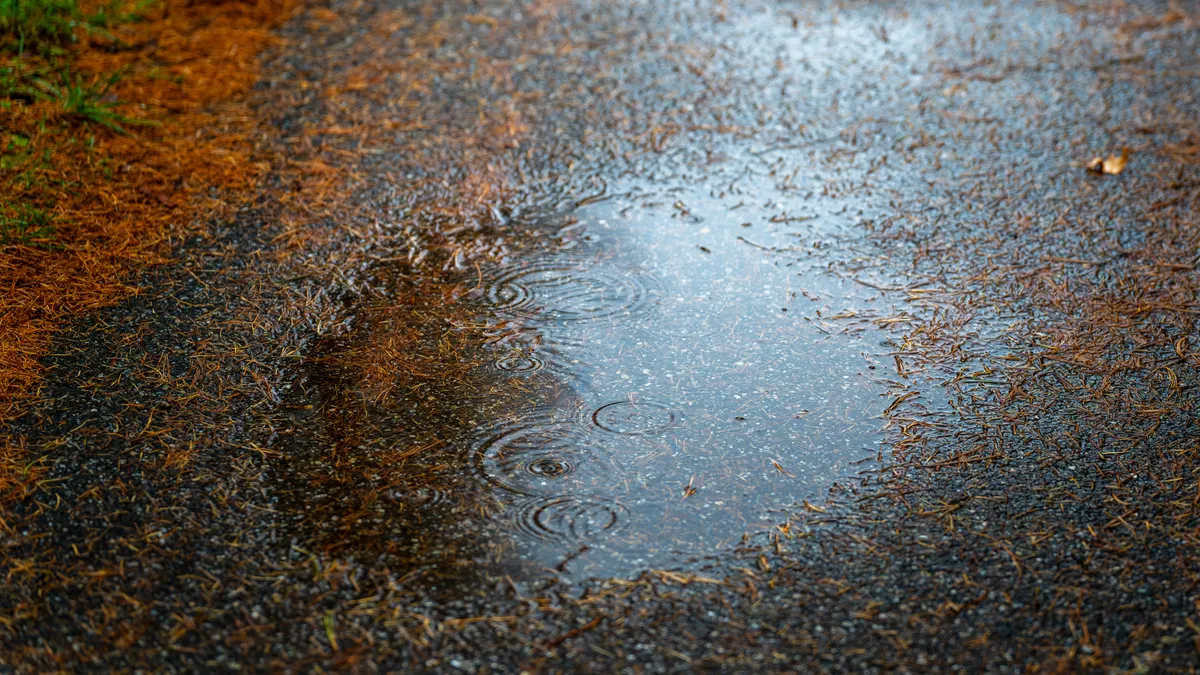
Mosquito Control After Heavy Rain
Last updated: October 21, 2026
Quick Answer: after heavy rain, the first 24 hours matter most, and the fastest mosquito control win is to find and remove standing water, slow-draining runoff, and clogged drainage points before the yard refills itself.
Heavy rain changes mosquito control because the yard can go from “mostly dry” to full of temporary breeding spots in a few hours. Mosquito Control After Heavy Rain: What Changes When the Yard Gets Saturated? starts with the same rule every time: inspect the places rain overloads first, remove the water they now depend on, and treat the pockets that stay wet after runoff, ideally with guidance from a drainage or pest professional if the source is unclear.
What heavy rain changes in the yard
Heavy rain turns mosquito control from a routine maintenance job into a drainage problem. When rainfall saturates the ground, water stops soaking in, collects in low spots, and lingers in anything that already holds water, from clogged gutters to compacted soil near downspouts.
That matters because mosquitoes do not need a swamp. A shallow puddle, a rutted lawn, a blocked storm drain edge, or water trapped in a bucket lid can become enough for rain-driven breeding. After storms, the yard often looks “wet everywhere,” but the real targets are the places where water stays put for more than a day or two.
The first change is timing. Before the rain, the main task is prevention. After the rain, the main task is triage: find the spots that became new water traps. That is why a post-rain mosquito control check starts with storm runoff paths, low spots, gutters, and soggy soil rather than with the broad lawn.
The second change is priority. A generic mosquito plan often focuses on the obvious. Heavy rain makes the hidden areas matter more. Water backed up beside a foundation, in a French drain outlet, under leaf mats, or at the bottom of a slope can matter more than the open yard because it keeps feeding new mosquitoes after the storm passes.
The third change is urgency. If the ground stays saturated for several days, mosquito pressure usually rises fast. A yard that drains slowly does not give you the luxury of “wait and see.” The faster the drainage check happens, the less likely the yard is to turn into a short-lived hatchery.
According to the CDC, mosquitoes can develop from egg to adult in about 4 to 14 days, which is why a wet yard can turn into a fast-cycle problem after one storm. The EPA also recommends removing standing water and fixing drainage sources as a core control step.
How to inspect the yard in the first 24 hours
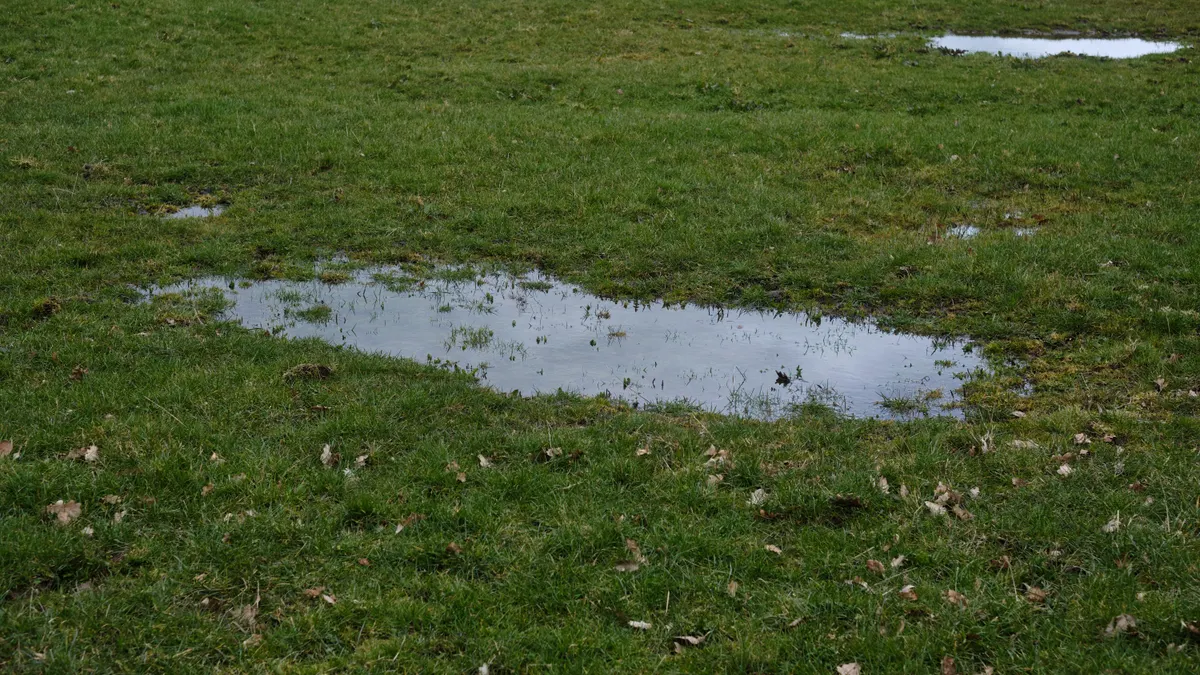
Because of that fast breeding cycle, check the yard the same day or the next morning, starting with the places where water naturally moves and stops. The point is to find 3 kinds of trouble: standing water, slow-draining water, and water trapped by debris.
- Walk the property after the rain slows, not while it is still actively flooding. Use a flashlight in shaded corners if needed. You are looking for water that remains still in depressions, along edges, and near hard surfaces.
- Look at gutters and downspouts first. A single overflow point can dump water onto the same patch of soil every storm, which keeps that area muddy and wet long enough for mosquitoes to use it.
- Check storm drains, curb edges, and any inlet grates near the yard. If leaves, mulch, or sediment are clogging the opening, runoff can back up and create a shallow pool right where water should be moving away.
- Scan low spots in the lawn and garden beds. If the soil looks shiny, squishy, or saturated after the rest of the yard has started to drain, that area needs priority.
- Follow water from roofline to ground. The goal is to see where it lands, where it spreads, and where it stalls. A downspout that empties into one muddy patch is a common cause of repeated rain-driven breeding.
- Make a quick note of every spot that still holds water after 24 hours. Those are the places to revisit the next day, because they are the most likely to keep producing mosquitoes.
This kind of inspection is not glamorous, but it saves time. Spraying the whole yard while ignoring the drain problem usually means the mosquito pressure comes back as soon as the next storm hits. The EPA’s mosquito guidance also puts source removal ahead of blanket treatment.
What to do about gutters, drains, and runoff
Clear the routes that move water off the property before treating the wet spots that remain. A clogged gutter or blocked storm drain can undo every other step, because it keeps re-wetting the same ground after each shower.
Start with gutters. Remove leaves, twigs, and roof grit so water can flow through the downspouts instead of spilling over the edge. Overflow from one corner can saturate the same strip of soil every time it rains, which is exactly the kind of repeated wetting mosquitoes use.
Next, look at downspout discharge. If a downspout empties onto soft ground, the soil can stay muddy long after the rain ends. In that case, the issue is not just “a wet patch”; it is a repeat source of runoff. A splash block, extension, or other drainage fix may be needed to move water farther away from the house.
Then check storm drains and any visible runoff channels. If leaves, grass clippings, or sediment are sitting at the inlet, clear them so water can move instead of pooling. This is a small job with a big effect after heavy rain because blocked runoff often creates the very conditions mosquito control is trying to prevent.
For the lawn, pay attention to low spots and compacted areas where water lingers. When the ground is saturated, foot traffic can make the problem worse by compressing the soil further. Even so, avoid walking through the worst areas for a day or two if you can, especially around drainage paths.
If water keeps reappearing in the same place after each storm, treat it as a drainage issue first and a mosquito issue second, and consult a drainage or pest professional if the pattern does not improve. Mosquito control works better when runoff is moving properly, and it fails faster when the yard keeps refilling itself.
For broader planning around timing, the hub page on mosquito control scheduling and seasonal timing is the better place to look once the immediate post-storm cleanup is done. If the problem repeats, a yard drainage guide or local extension resource can help identify whether grading, gutter extensions, or soil compaction is the real cause.
Why soggy soil and temporary pools matter more than puddles
Soggy soil matters because it holds moisture after the visible water is gone, and that hidden wetness can keep breeding conditions alive longer than a quick glance suggests. Temporary pools matter because they appear suddenly, often in places that were dry the day before.
A puddle in the open may look like the obvious problem, but the more durable problem is often the wet patch that never fully dries. Heavy rain can saturate clay-heavy or compacted soil so water stays near the surface, especially in low spots and along shaded borders. In that kind of damp ground, the yard can still support mosquitoes even when the surface no longer looks flooded.
Temporary pools are the opposite kind of problem: short-lived, but widespread. Rain can collect in wheel ruts, depressions at the edge of patios, tarps, toys, plant saucers, and folded covers. Even small containers can matter if they sit outside through one storm and then hold water for several days.
This is where many generic guides miss the point. They talk as if mosquitoes only care about large pools. In a saturated yard, the issue is scattered water, not one dramatic puddle. A dozen small wet pockets can matter more than one larger patch because they are easy to miss and easy to keep repeating after each storm.
The practical response is to separate “dries in a few hours” from “still wet tomorrow.” The second group gets attention. If the yard is still soggy 24 to 48 hours after rain, that is the sign the area has become part of the mosquito-control problem, not just a byproduct of weather.
The post-rain mosquito control checklist that actually helps
Use this checklist to reduce the places mosquitoes can use after a storm, starting with the highest-value fixes. It is a control routine, not a landscaping project.
- Empty anything that holds rainwater. Buckets, toys, plant saucers, tarp folds, and wheelbarrows can trap enough water to matter after one heavy storm.
- Unclog gutters and clear storm-drain edges. Water that cannot move becomes water that lingers, and lingering water is the issue.
- Break up or redirect runoff from downspouts. If one outlet keeps soaking the same patch of soil, that patch keeps turning into a problem zone.
- Rake away wet leaves and mulch mats where they cover the ground. Debris traps moisture underneath and slows drying.
- Avoid driving or repeatedly walking through soggy ground. Compacted soil drains worse, which extends the wet period after rain.
- Recheck the same spots the next day. What looked minor on day one can be a persistent low spot by day two.
If a wet area is still there after 48 hours, treat it as a drainage failure, not a one-off puddle, and consult a professional if you are unsure whether the fix is simple or structural. That is the point when a more durable fix becomes more useful than another quick cleanup.
A common mistake is to spray first and inspect later. That can feel productive, but it misses the source. Mosquito control after rain is won by removing the conditions that follow the storm, not by pretending the storm never happened. The EPA and CDC both emphasize source reduction before treatment.
When spraying helps and when it wastes effort
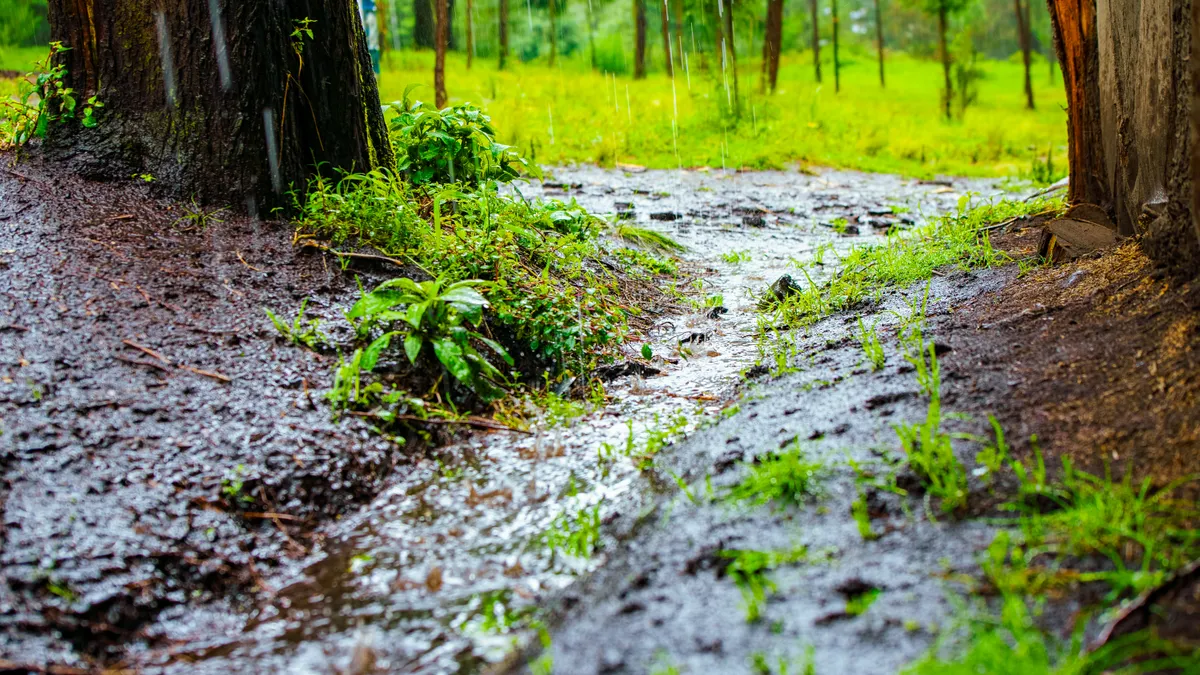
Spraying helps only after the wet source problem is under control. If the yard is still saturated, a spray can reduce adult mosquito activity for a short time, but it will not solve the breeding pressure that comes from new water sitting in low spots, gutters, and runoff paths.
That trade-off matters. A treatment can be useful when the property has been drained, the obvious water traps are gone, and mosquitoes are still active around the yard. It is a poor use of time when the ground is still muddy and the drains are still blocked, because the yard keeps creating new mosquitoes faster than a surface treatment can compensate.
This is also where the phrase “post-rain mosquito control” earns its meaning. The job is not simply to kill mosquitoes after a storm. It is to change what the yard is doing after the storm. If storm runoff keeps backing up or soggy soil stays wet for days, the better first move is fixing the yard’s water behavior.
The honest limitation is that not every drainage problem is a quick DIY fix. Some yards have a slope issue, compacted soil, or a recurring runoff path that needs more than cleanup. A person can clear the obvious debris and still lose the battle if the site always re-fills after rain. That is not a sign to keep spraying harder; it is a sign that drainage, not mosquito presence alone, is the real problem. The CDC and local extension offices both recommend addressing standing water sources first.
What to skip after heavy rain
Skip the broad, whole-yard treatment when the water problem is still active. That approach wastes product and attention on grass that is already draining while ignoring the low spots and runoff channels that matter most.
Do not chase every damp patch as if it were equal. A patch that dries by afternoon is not the same as a depression that stays wet into the next day. Heavy rain creates a hierarchy, and the best control comes from ranking the yard by how long each area stays saturated.
Do not ignore gutters because the lawn “looks fine.” A clean-looking yard can still be fed by one clogged edge or one downspout that dumps water in the wrong place. That hidden repeat source is often why mosquitoes seem worse after storms than before them.
Do not wait for the ground to firm up before checking it. Muddy ground tells you where drainage is failing right now. If you wait a week, the evidence gets softer and the next rain erases the pattern again.
Instead, use the storm as a map of where the yard fails. If runoff keeps cutting the same channels, the fix has to address that path, not just the visible puddle. That is why mosquito control after heavy rain works best as a drainage-first response.
Key Takeaways
- Heavy rain changes mosquito control by creating new wet spots, not by changing the mosquitoes themselves.
- The best first pass is a drainage check: gutters, storm drains, runoff paths, and low spots.
- Temporary pools and soggy soil matter because they can keep breeding conditions going after the visible water is gone.
- A spray is only useful once the yard is no longer refilling itself with runoff.
- If the same place stays wet after every storm, the real problem is drainage, not just mosquitoes.
Should mosquito control be done after rain?
Yes, mosquito control is often most useful after rain because stormwater creates fresh breeding opportunities. The first step is checking gutters, storm drains, low spots, and soggy soil so water does not sit long enough to support mosquitoes. If the yard is still saturated, drainage work matters more than broad treatment.
Why do mosquitoes get worse after storms?
Mosquitoes get worse after storms because rain leaves behind temporary pools, slow-draining runoff, and saturated ground. Those conditions give them more places to breed at once. Heavy rain can also refill the same wet areas repeatedly, so the problem seems to return quickly even after a cleanup.
What should be checked after a heavy rain?
After a heavy rain, check gutters, downspouts, storm drains, low spots, and any area where muddy ground stays wet. Look for water that remains still after runoff should have moved away. The goal is to find the spots that keep collecting water for 24 to 48 hours, since those are the most likely mosquito sources.
Drafted with AI; not yet reviewed by a person.