What Is Included in a Professional Mosquito Control Service?
Last updated: September 10, 2026
Key Takeaways
- A seasonal program might be every 21 to 30 days, while a one-time visit is often less durable.
- Relief usually lasts 3 to 10 days, then the mosquitoes come back.
- The right alternative is a schedule tied to conditions, often every 3 to 4 weeks in peak season.
- If a provider can’t explain the sequence in under 10 minutes, that usually means they’re selling a generic spray, not a mosquito program.
A professional mosquito control service usually covers a property inspection, source reduction, targeted treatment of breeding and resting areas, plus a follow-up plan that fits the season and your yard. Homeowners, landlords, and property managers all need the same basic answer: what am I paying for, what should show up on the service sheet, and what does a good provider do that a spray-and-go outfit misses? Consult a professional pest control provider and review EPA guidance on mosquito control before you book a service.
Who this is for — and what a real mosquito service should cover
Recurring bites, standing water, thick plantings, and outdoor spaces that should stay usable after dusk — that’s the crowd this is for. Yards with gutters that hold water after a 1-inch rain, planters that stay wet, shaded hedges, drainage swales, birdbaths, ornamental ponds, or a neighbor’s untreated breeding site near the property line usually belong in the same bucket; consult a professional for site-specific advice and follow EPA mosquito control guidance.
I’m also including people who manage multi-unit buildings, daycare grounds, restaurant patios, and HOA common areas. Those sites need records: where mosquitoes are breeding, what was treated, and what was left alone; consult a professional and ask for documentation that matches CDC and EPA recommendations. A provider should be able to explain the difference between an adulticide, which kills adult mosquitoes, and a larvicide, which targets larvae in water before they emerge.
This subject is not for someone hunting for a single magic spray. Mosquito control works best as an integrated pest management program, often shortened to IPM. So the service should combine inspection, habitat changes, and targeted treatment rather than relying on weekly blanket spraying; consult a professional to match the plan to the property. If a company’s pitch is basically “we fog the yard every 14 days,” that’s a blunt instrument, and it misses the point on properties with obvious water issues.
The service should also be clear about what it does not include. A standard mosquito visit is not the same as treating roof rats, carpenter ants, termites, or tick habitat; consult a professional if the problem may involve another pest. If the quote sounds broad but the scope is vague, ask for the exact treatment areas and the chemical class or device type used. A careful provider can give that in plain language. Simple, really.
What is usually included in mosquito control?
Five pieces are typical: inspection, source reduction advice, larval control, adult mosquito control, and monitoring or follow-up. The exact mix depends on the property, the season, and local regulations, but those are the parts I’d expect on a proper service description; consult a professional and review EPA and CDC mosquito-control guidance.
First comes the inspection. A technician should look for standing water in containers, clogged gutters, low spots in turf, fountain basins, sump discharge areas, French drains, tarps, and anything that holds water for 5 to 7 days. Mosquitoes don’t need a pond the size of a swimming pool; a bottle cap, a wheelbarrow, or a clogged gutter can be enough for some species. Tiny trouble, big headache.
Source reduction is the unglamorous part, and often the most valuable. That means dumping water, clearing debris, fixing drainage where possible, and finding hidden breeding spots. On a good service call, I’d expect the technician to tell you which items can be emptied weekly, which need repair, and which call for a different treatment.
Larval control means applying a product or device directly to water where mosquitoes breed. Most people hear Bti — short for Bacillus thuringiensis israelensis — a bacterial larvicide used in mosquito dunks, granules, or briquettes. It is common in catch basins, ponds, and other non-drinking water features when allowed by the label. A provider should not scatter larvicide randomly; it belongs only where water stands.
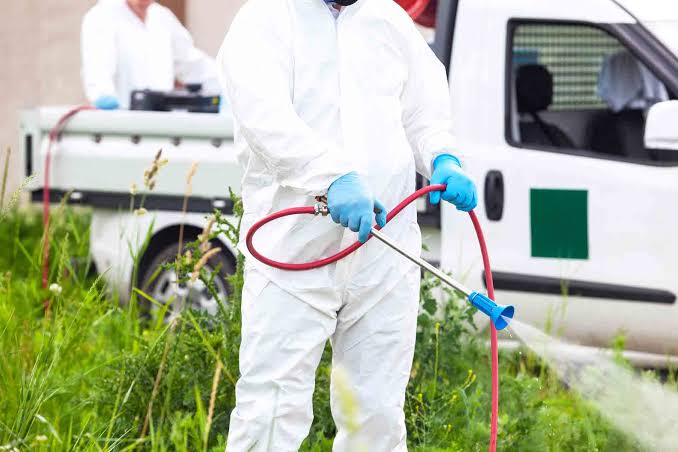
Adult mosquito control usually means a perimeter or targeted residual treatment on resting sites such as shrubs, under decks, shaded fences, and other humid, protected areas. A typical service does not need to soak every square foot of lawn. Overapplication is wasteful and can miss the places mosquitoes actually rest.
Follow-up is the part many people forget to ask about. Mosquito pressure changes with rainfall and temperature. A service may be one-time, monthly, or seasonal, but it should include some plan for reassessment after heavy rain or a change in conditions. If the company cannot say when they would return or what would trigger a retreatment, the package is incomplete.
What happens during a professional mosquito service?
A professional mosquito service should begin with a walk-through, then move to targeted treatment, then end with clear instructions and a record of what was done. If a provider can’t explain the sequence in under 10 minutes, that usually means they’re selling a generic spray, not a mosquito program.
- Inspect the property line and main activity areas. The technician should cover front, back, side yards, patios, play areas, and any shaded corridor where people sit for 10 minutes or more. Verify that the inspection includes gutters, downspouts, drains, planters, tarps, and containers. A problem sign is when only the open lawn gets attention and the edges are ignored.
- Identify standing water and probable breeding sites. Look for water that has sat for 48 hours or more after rain, especially in low spots, basins, and forgotten containers. Verify that each site is named or marked, not just “there was some water.” A problem sign is vague language with no list of locations.
- Remove or reduce accessible water. The technician may dump small containers, advise on gutter cleaning, or recommend drainage repair for repeating low spots. Verify that the service includes practical source reduction advice, not just chemical treatment. A problem sign is when obvious water sources are left untouched and no plan is offered.
- Apply larvicide where water cannot be eliminated. This may involve Bti dunks or another labeled larvicide in non-potable standing water, ornamental basins, or catch basins. Verify that the product is used only where the label allows and that the target water source is listed. A problem sign is any product applied broadly “just to be safe.”
- Treat resting areas with a residual adult control product when justified. Focus is usually on shaded, humid, protected surfaces such as vegetation, under eaves, and along fence lines. Verify that the treatment is narrow and purposeful. A problem sign is indiscriminate spraying across the entire yard, driveway, and open turf.
- Check for conditions that will undo the treatment. Heavy irrigation, broken sprinklers, dense ivy, or ongoing runoff can reset the problem within days. Verify that the technician notes these conditions and tells you how to change them. A problem sign is no mention of irrigation, drainage, or shade-heavy cover.
- Document what was treated and when. A proper service record should include the date, the areas covered, and the product category or method used. Verify that you can see the service record without guessing. A problem sign is a receipt that only says “mosquito treatment.”
- Set the next decision point. This may be a follow-up after 21 to 30 days, after the next heavy rain, or at the start of peak mosquito season. Verify that the provider tells you when to judge results and what changes mean the plan needs adjustment. A problem sign is no follow-up trigger at all.
A good service is measured by whether mosquitoes drop around the places you actually use, not by whether every insect disappears. That distinction matters. Mosquitoes can migrate from surrounding properties, and a service on one lot cannot fix a whole block. If the provider promises total elimination, I’d treat that as a warning sign rather than a selling point. Too neat. Too slick.
What should I ask before I book?
Ask whether the service is inspection-based, what water sources they treat, and whether they use source reduction, larvicides, residuals, or a combination. The best question is simple: “What exactly will you do on my property, and what will you not do?”
Ask for the treatment interval in days or weeks. A seasonal program might be every 21 to 30 days, while a one-time visit is often less durable. Ask what happens after a heavy rain of 1 inch or more, because some properties rebound quickly after rain events. Ask whether the service includes gutters, drains, and standing water, or only foliage treatment.
I’d also ask whether they follow label directions and local mosquito-control rules. That is not bureaucratic trivia. The pesticide label is the law, and it defines where, how, and how much can be applied. If a company cannot speak clearly about label limits, I would not hire it. Consult a professional if the label language is unclear.
Ask how they handle properties with ponds, rain barrels, fish, pollinator gardens, or vegetable beds. These are edge cases, and a one-size spray can create avoidable damage. A provider should separate treatment zones and avoid contaminating water that should not be treated. If they sound casual about that, the plan is too loose.
Finally, ask what result you should expect. A credible answer is usually “fewer bites in treated areas” or “reduced mosquito activity,” not “zero mosquitoes.” That honesty tells you more than a polished promise.
When should I stop a standard mosquito program and do something else?
You should stop a standard yard-spray approach when the problem is driven by a source that spraying cannot fix. Here are the situations where I would change tactics.
Water sits for more than 5 to 7 days after rain: that means breeding sites are active — fix drainage, empty containers weekly, and treat the water source directly if it cannot be removed.
Your yard has a pond, fountain, or catch basin: that means larvae may be coming from water you cannot simply dump — use a labeled larvicide or specialized water treatment plan, not broad foliar spraying.
There is dense shade plus thick groundcover or ivy: that creates resting habitat — thin the vegetation and focus treatment on the protected surfaces, not the open lawn.
Neighbors have obvious standing water or unmanaged containers: that means reinfestation is likely — your property may need more frequent follow-up, but you still need source reduction on your side.
You are near a wetland, stream, or stormwater feature: that changes what can legally and safely be treated — do not improvise; use a provider who understands site restrictions and local rules.
People, pets, fish, or edible plants occupy the treatment area: that means the scope needs tighter boundaries — choose products and methods labeled for that setting, or avoid treatment in that zone entirely.
A standard mosquito service is the wrong tool when the main issue is architectural drainage, not insects. If downspouts dump at the foundation or a yard slopes into a permanent puddle, treatment alone is a short-lived fix. The consequence is repeated service calls with little change in bites.
The mistakes that make mosquito service feel like it failed
The biggest mistake is treating only the symptoms and ignoring the breeding site. Relief usually lasts 3 to 10 days, then the mosquitoes return. The right alternative is to combine treatment with water removal, drain repair, or container cleanup.
A second mistake is overusing fogging or spraying in open turf. Mosquitoes rest in shaded, humid spots, so broad lawn treatment wastes product and misses the real harborage. The right alternative is targeted treatment on foliage edges, under decks, and along shaded perimeters.
A third mistake is skipping gutters and downspouts. A clogged gutter is one of the most common repeat problems because it collects water and organic debris. The consequence is a hidden breeding site right above the places people use most. The fix is a gutter cleanout and a plan to keep it clear after storms.
A fourth mistake is expecting one visit to solve a seasonal problem. In much of the U.S., mosquito pressure rises after rain and during warm months, so a one-time service may not hold. The right alternative is a schedule tied to conditions, often every 3 to 4 weeks in peak season.
A fifth mistake is not reading what the company actually treated. If the service record does not list the areas, product type, and date, you cannot tell whether the visit matched the problem. The alternative is to demand a clear service note before you assume the program failed.
How do I judge whether the service worked?
A service worked if the number of mosquitoes in the places you use drops noticeably within 24 to 72 hours after treatment and stays lower as the next rain cycle passes. That’s the practical standard, not a laboratory count.
Look at the spaces people occupy: patio chairs, pool edges, grill areas, play spaces, entry walks. If bites remain concentrated in one corner, the provider should adjust the plan, not repeat the same spray unchanged. If activity is still high after 1 to 2 treatment cycles, there is usually a missed breeding source or an untreated neighboring source.
I’d also judge the service by the quality of the explanation. A good company can tell you why mosquitoes are present, where they are likely coming from, and what part of the plan addresses each source. If the answer is only “we sprayed,” the service may be too thin for the property.
Cost matters, but I can’t give a universal number because pricing depends on acreage, access, structure density, water features, and treatment frequency. What I can say is that a program with inspection, source reduction, larval control, and follow-up costs more than a one-pass spray because it does more. For pricing, ask for a written estimate and compare it with local mosquito-control guidance from EPA.
FAQ
Does a mosquito service include backyard spraying? Yes, often, but it should be targeted to resting areas rather than sprayed across the entire yard.
Will one treatment get rid of mosquitoes for the whole season? Usually not. Mosquito pressure changes with rain, temperature, and nearby breeding sites, so follow-up is often needed.
Are mosquito dunks part of professional service? They can be, especially for standing water that cannot be removed. Bti is a common larvicide in those situations.
Do I need to be home for the service? Not always, but someone should be available if the technician needs access to gates, water features, or problem spots.
What is the main thing to look for in a provider? I would look for a service that inspects, documents breeding sites, and explains the plan in plain language.