Mosquito Prevention Tips for Backyards, Pools, and Drainage Areas
Last updated: September 10, 2026
Key Takeaways
- Inspect pool water chemistry and circulation every 2 to 3 days in warm weather.
- Problem sign: a spot that stays wet or soft for 48 hours or more.
- Verify: fewer cool, damp hiding places within 10 to 15 feet of doors and seating areas.
- Clean gutters and extend downspouts 3 to 6 feet away from the house.
Mosquito prevention tips for backyards, pools, and drainage areas boil down to one plain job: get rid of standing water quickly, keep the water moving where it has to remain, and make the yard less appealing to adult mosquitoes. Got a pool, a patio, a lawn, or a drainage headache? Then that is the task. This article assumes you can inspect your own property, clear debris, and change how water sits in containers, gutters, and low spots. But if you are dealing with a septic backup, a collapsed drain, or repeated flooding that you cannot keep up with, the problem has moved beyond routine yard care and usually needs a drainage contractor or local public works help. For a broader checklist, see our seasonal yard maintenance guide and pool care basics.
What mosquitoes are looking for in your yard
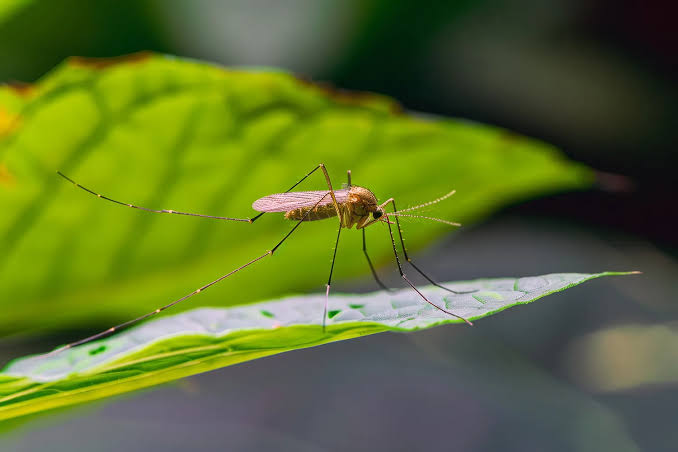
Standing water is the target. Mosquitoes need it to breed, and plenty of species can use tiny amounts. A bottle cap, clogged French drain outlet, tarpaulin pocket, or pool cover depression can be enough. The adult mosquito you see is only part of the picture; larvae live in water for days before emerging, so the real objective is water that sits long enough for eggs to hatch and develop. The CDC notes that mosquitoes can breed in very small amounts of water, so the safest approach is to remove it quickly where possible.
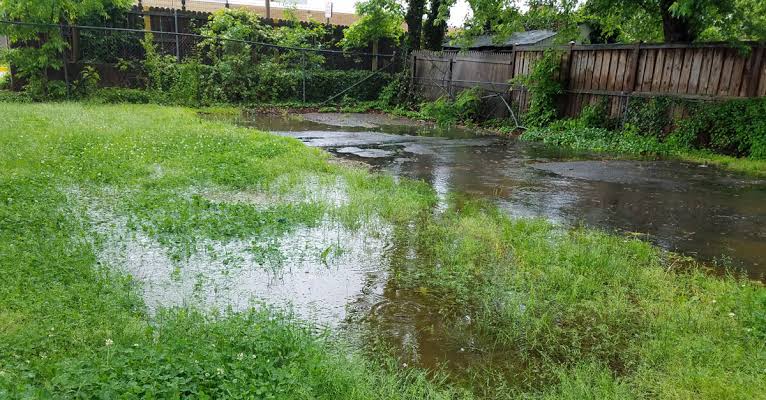
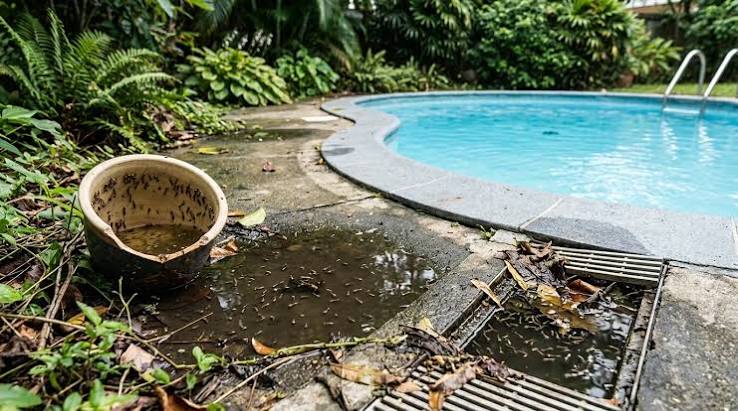
I would divide the yard into three zones: containers, structures, and ground water. If the source is not obvious, consult a drainage professional or extension office before spending money on fixes. Containers include buckets, toys, plant saucers, birdbaths, wheelbarrows, trash-can lids, and tarps. Structures include gutters, downspouts, pool skimmers, filter housings, and drain grates. Ground water includes bare soil, compacted low spots, clogged swales, and the edges of patios where runoff pools for more than 24 hours.
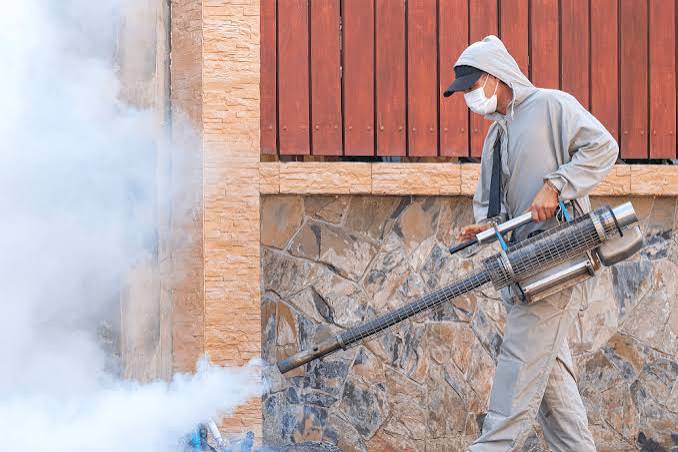
That 24-hour mark matters. Not every puddle is a mosquito nursery, sure, but if water is still there the next day, it deserves attention. A generic “spray the yard” article misses this; adulticide fogging may knock down flying mosquitoes for a short time, but it does almost nothing to solve a breeding site in a clogged drain or a pool cover. The boring cleanup work usually matters more than chemicals. Sounds dull. It works.
Two terms are worth knowing. A catch basin is a below-grade inlet that collects runoff and routes it into a pipe. A French drain is a gravel trench with a perforated pipe that moves subsurface water away from a problem area. Both can become mosquito habitat if they hold water instead of draining it.
How do I stop mosquitoes from breeding in the backyard?
Find every place water can sit for more than 24 hours; fix that first, then keep the yard dry enough that new water does not linger. During mosquito season, I would do a weekly sweep and repeat it after any rain over about 0.25 inch. For a deeper home checklist, use our mosquito control guide.
- Walk the yard with a 5-gallon bucket and a flashlight. Tip or empty anything that can hold water, including toys, plant saucers, tarps, wheelbarrows, and grill covers. Verify: no visible standing water remains in containers. Problem sign: any item that refills with rain or irrigation and keeps a puddle for the next day.
- Clear gutters and downspouts end to end. Remove leaves and roof grit from gutters, and make sure downspouts discharge at least 3 to 6 feet away from the foundation, ideally onto a sloped surface. Verify: water exits freely during a hose test. Problem sign: overflow at seams, slow trickle, or water pooling at the base of the wall.
- Inspect pool water chemistry and circulation every 2 to 3 days in warm weather. Run the pump long enough to keep the surface moving and to skim debris; follow the pump and filter schedule for your model, and keep the pool covered only with a tight-fitting cover. Verify: no dead zones, no algae film, no leaves sitting in stagnant water. Problem sign: cloudy water, a stopped pump, or a cover that sags into pockets of rainwater. If the water does not stay balanced, consult a pool professional and follow EPA guidance on safe pool care.
- Dump standing water from pool covers, patio covers, and tarp folds. Use a pump, siphon, or broom to move water off any cover that sags. Verify: no pocket deeper than a shallow film. Problem sign: repeated “puddles” in the same place after every rain, which means the cover needs re-tensioning or a different fit.
- Fix low spots in turf and hardscape. Add topsoil to shallow depressions in lawn areas, regrade mulch beds, and seal or reset pavers that create a bowl. Aim for water to move away from buildings and toward a drain or swale. Verify: water no longer sits for more than a day after rainfall. Problem sign: a spot that stays wet or soft for 48 hours or more.
- Flush and check drains, catch basins, and French drain outlets. Remove leaves, mud, and roots from grates and outlet ends; if allowed, flush the line with a hose from the inlet side. Verify: flow improves and no standing water remains in the basin after the hose is off. Problem sign: slow drainage, gurgling, or water backing up to the grate.
- Put larvicide only where water cannot be removed. Use a larvicide labeled for mosquito control, such as Bacillus thuringiensis israelensis (Bti) dunks or bits, in rain barrels, decorative ponds, or catch basins that must hold water. Follow the label exactly. Verify: the product is meant for that water type and the dose matches the container volume. Problem sign: using it in a swimming pool or on a surface where the label does not allow it.
- Reduce adult resting spots near the house. Trim dense shrubs so air moves through, keep grass shorter around shaded edges, and thin clutter where mosquitoes rest during the day. Verify: fewer cool, damp hiding places within 10 to 15 feet of doors and seating areas. Problem sign: dense ivy, stacked pots, or wet leaf piles beside the patio.
The order matters. I would usually remove water first, then improve flow, then use larvicide only for water you cannot eliminate. Spraying the air first is the most common mistake, and it leaves the breeding site untouched. See also our drainage troubleshooting page and yard cleanup checklist.
What should I do about a swimming pool that attracts mosquitoes?
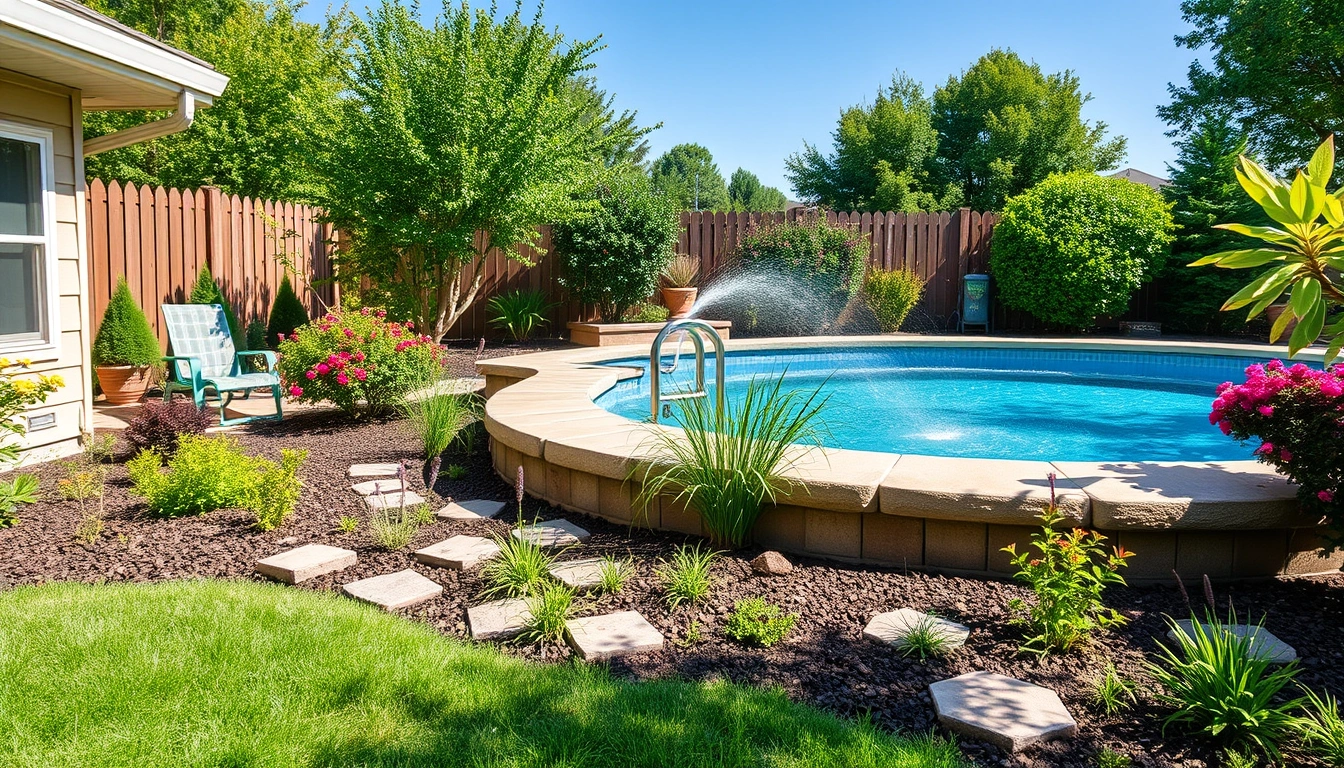
A pool attracts mosquitoes when circulation stops, the cover holds water, or the edges collect debris. A properly maintained pool is usually a poor breeding site; a neglected one can become a large one.
Start with the pump and skimmer. If the pump is off for more than a day in hot weather, surface water can go still enough for eggs to survive. Check that the skimmer baskets are clear and that water is moving across the surface. If the pool is open, skim leaves, because organic debris gives larvae a place to hide and feeds algae.
Using a solid pool cover? Do not let it become a pond. The standing water on top of a cover is the problem, not the plastic itself. A cover pump or siphon works better than waiting for evaporation. For a mesh cover, check that sagging areas are not holding enough rain to form pockets. If the cover design cannot stay tight, I would consider changing it; a cover that routinely traps water is a mosquito magnet.
Pool edges and equipment pads matter too. Look at low spots around the coping, under the filter, near hose bibs, and under backwash discharge areas. A leak that keeps the deck damp may not look dramatic, but it creates exactly the shaded, wet strip mosquitoes use.
Do not dump random yard chemicals into pool water hoping to “kill mosquito larvae.” Pool chemistry and mosquito control are not the same thing. Chlorine levels that keep a pool sanitary are managed for swimmers and the pool surface, not as a cure for every puddle nearby, and pool care should follow manufacturer guidance or a pool professional’s advice. For a pool that is abandoned, green, or structurally damaged, standard backyard advice stops applying; at that point, draining, securing, or restoring the pool becomes the real fix.
A practical rule: if you cannot keep water moving and clear enough to see the bottom in an ordinary residential pool, the problem is no longer mosquito prevention alone. It is pool maintenance or repair.
How do I handle drainage areas and soggy spots without making the problem worse?
Drainage areas work best when water leaves the site faster, not when the symptom gets sealed over. A soggy strip beside a fence or along a driveway usually means runoff is being trapped by grade, compacted soil, a clogged drain, or both.
Start by watching what happens in a 10-minute hose test or after the next rain. I would note where water enters, where it stalls, and where it exits. If the same 2-foot-wide patch stays wet while the area around it dries, you have found the problem zone. That tells you whether you need cleaning, regrading, or a drain repair.
For a simple surface swale, clear sediment and reshape the channel so water has a visible path away from the house. Even a shallow correction can help if the slope is continuous. For a catch basin, remove leaves and sludge from the grate and the sump below it. If a basin holds water long after rainfall, the outlet may be restricted or the pipe may be clogged. For a French drain, check the outlet first; a buried line with a blocked exit cannot move water, no matter how much gravel is around it.
Be careful with quick fixes. Filling a swampy area with mulch may hide the wet spot for a week, but it can also trap water underneath. Heavy clay soil drains slowly, so in some yards the best answer is more aggressive regrading or a properly sized drain system, and a drainage contractor can tell you when that is justified. If the soil is compacted, aeration can help lawns, but it is not a cure for a failed drainage design, so consult a local turf or drainage professional if the wet spot keeps returning.
This is where many generic articles mislead readers: they act as if every wet area is a mosquito issue and every mosquito issue can be solved with one product. If the low spot is caused by a downspout dumping directly onto a flat patio, move the discharge first. If it is caused by roof runoff, a splash block or extender may be enough. If it is caused by groundwater or repeated flooding, the right move may be a drainage specialist, not a lawn treatment. For related help, see downspout extension tips and grading basics.
When should I stop doing it myself?
You should stop the DIY approach when the water problem is bigger than cleanup, when the source is hidden, or when a structure may be failing. In those cases, the right next step is repair, not more spraying.
Water returns to the same spot within 24 to 48 hours after you clear it: that means the grade, soil, or drainage path is still wrong — regrade the area or have the drainage path evaluated.
A catch basin or drain line backs up every time it rains more than a light shower: that suggests a blockage, collapse, or undersized system — have the line inspected and cleared properly.
A pool stays green, cloudy, or stagnant despite pump operation: that is a pool maintenance or repair problem — restore circulation and water quality before worrying about mosquitoes.
You find water inside a basement, crawl space, or under a slab edge: that is not a yard nuisance anymore — address the intrusion source and do not rely on mosquito control to mask it.
Standing water is coming from a neighbor’s property, a shared easement, or street runoff: you may not be able to solve it alone — document the source and work through property management, HOA, or local drainage authorities.
A septic area, sewer cleanout, or utility box is the wet spot: that can point to a sanitation or utility issue — keep people away and contact the responsible service provider.
There is also a simple limit to DIY mosquito work: if you cannot find the breeding water in 15 to 20 minutes of inspection, you may be dealing with hidden containers, clogged underground drainage, or an off-site source. More fogging will not fix that. I would stop and trace water flow instead.
The mistakes people make, and what they cost
The biggest mistake is treating adult mosquitoes instead of breeding sites. A fogger or yard spray can give short relief, but if water still sits in a tire, bucket, or drain, the cycle continues. The better alternative is to remove standing water and use larvicide only in containers you cannot empty.
Another common error is forgetting roof runoff. A gutter packed with leaves can move a surprising amount of water onto a foundation edge or down onto a flat patio. The cost is a wet strip that breeds mosquitoes and can also invite wood rot. Clean gutters and extend downspouts 3 to 6 feet away from the house.
People also ignore the pool cover. A cover with a 1-inch puddle after rain is not “protected”; it is breeding water. The alternative is to pump off the water or tighten the cover so it sheds runoff instead of holding it.
A fourth mistake is dumping mulch, sand, or gravel into a low spot and calling it fixed. That can make the surface look better while water stays trapped below. The cost is hidden standing water. The correct move is to restore slope or install a drain that actually carries water away.
A fifth error is using a larvicide in the wrong place. Bti is useful in rain barrels, decorative ponds, and some catch basins, but it is not a substitute for cleaning, grading, or pool care. Read the label; if the water body is not listed, do not improvise.
The last mistake is waiting for “dry weather” to solve it. Mosquitoes do not need a swamp. A forgotten saucer, clogged grate, or tarp pocket is enough. A 10-minute weekly inspection during warm months beats a one-time cleanup every time.
FAQ
How often should I check for mosquito breeding spots?
Once a week is a good baseline during warm weather, and after heavy rain or irrigation changes. For a pool, every 2 to 3 days is safer.
Will a fan keep mosquitoes away?
A fan helps around patios and seating areas because mosquitoes are weak fliers, but it does not solve standing water.
Can I use bleach or pool chlorine in a drain or birdbath?
No. Use only products labeled for the site and the pest. If you need help deciding, consult a licensed pest control operator or your local extension service.